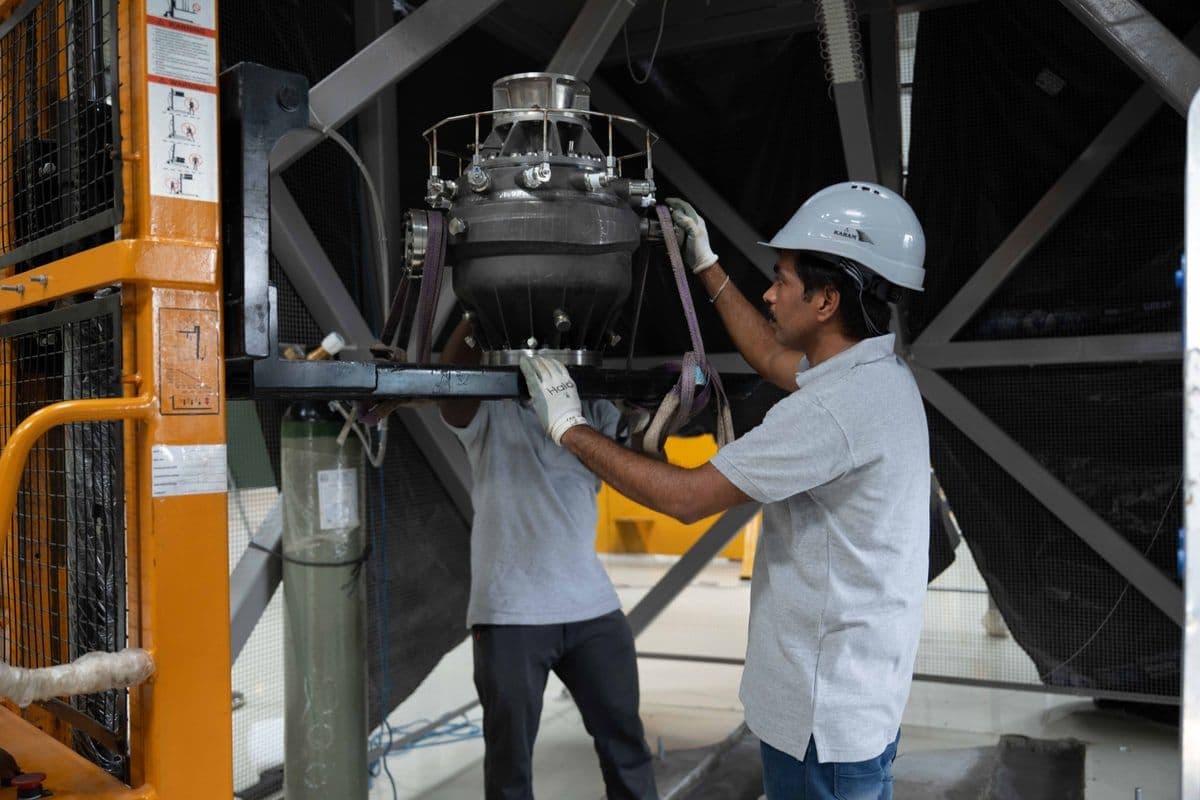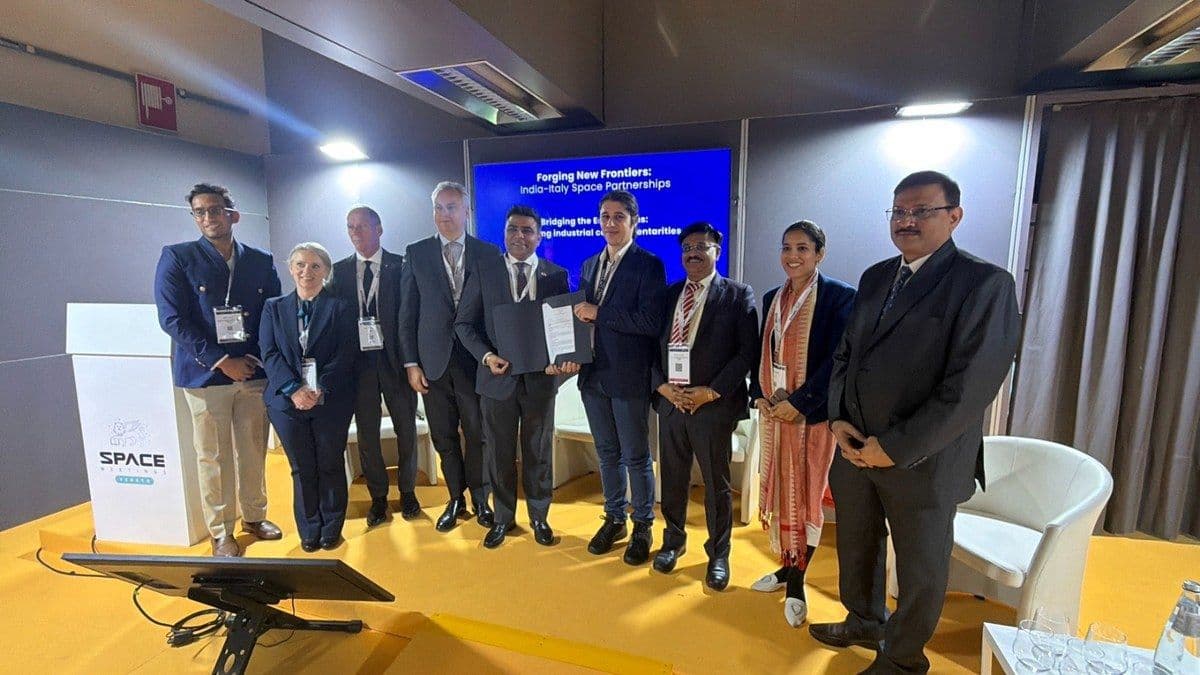

India’s space ambitions are moving beyond exploration towards building the capacity to transport payloads to orbit more frequently and at scale. Astrobase intends to add 1,000 tonnes to India’s annual space transportation capacity from Indian soil, a vision that requires advanced propulsion systems supported by robust testing, manufacturing and launch infrastructure.
As part of this effort, Astrobase is expanding its rocket testing facility at Thimmasamudram in Andhra Pradesh by 339 acres, bringing its total footprint to approximately 360 acres. The expansion marks an important step towards strengthening India’s indigenous space transportation capabilities.
The expanded facility will support static hot-fire testing, integrated stage testing, hop tests, and reusability validation. These capabilities will help evaluate launch vehicle performance, refine complex systems and advance technologies required for reliable, repeatable access to space.
For India’s growing space sector, infrastructure of this scale is essential. Developing advanced rockets is only part of the challenge. Equally important is the ability to test, validate, and improve launch systems consistently, turning engineering innovation into dependable operational capabilities.
The Andhra Pradesh expansion, backed by a proposed investment of around ₹800 crore, will complement Astrobase’s planned manufacturing infrastructure in Karnataka, strengthening domestic capabilities across propulsion development, manufacturing, assembly, and testing. The project is also expected to create 500 direct and 1,000 indirect jobs, contributing to India’s growing aerospace ecosystem.
As global demand for space access increases, India’s ability to independently develop, test and operate launch systems will be central to its long-term competitiveness. The expansion at Thimmasamudram represents another step towards building a future where access to space is more reliable, scalable and sustained from Indian soil.
Covered by The Hindu BusinessLine, The Times of India